

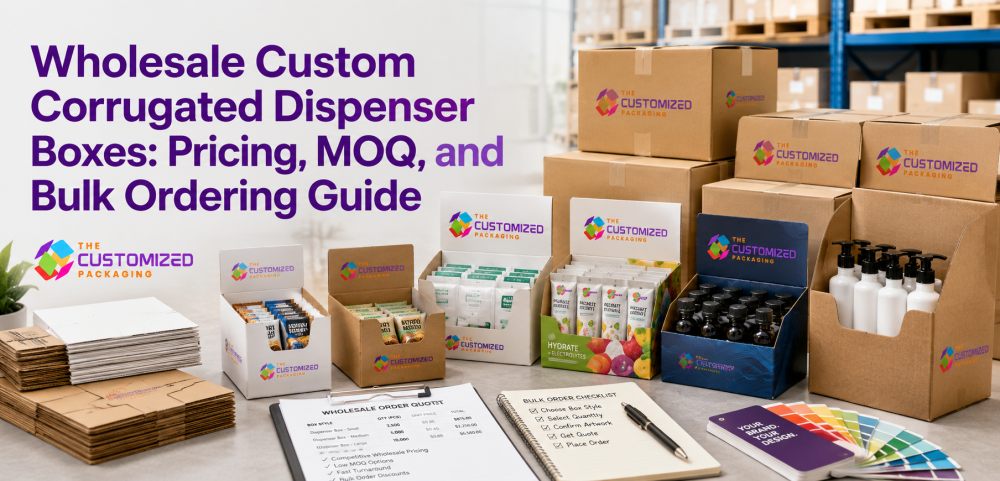
Wholesale Custom Corrugated Dispenser Boxes: Pricing, MOQ, and Bulk Ordering Guide
Businesses that use dispenser packaging regularly often reach a point where ordering small quantities is no longer the most economical or operationally efficient option. Retail brands, food companies, cosmetic businesses, healthcare suppliers, manufacturers, wholesalers, distributors, ecommerce operations, pharmacies, offices, and industrial organizations may need hundreds or thousands of boxes with the same dimensions, material, printing, opening style, and product capacity.
This is where wholesale custom corrugated dispenser boxes become valuable.
A wholesale order allows businesses to manufacture dispenser packaging around the exact product dimensions, packed weight, dispensing direction, shelf space, counter space, artwork, corrugated material, flute profile, insert design, and distribution requirements. Instead of relying on generic stock cartons, businesses receive packaging developed specifically for their products and operations.
Custom dispenser boxes may include front openings, gravity-feed channels, countertop displays, shelf-ready tear-away panels, top-access openings, side dispensers, internal ramps, dividers, raised headers, reinforced bases, and printed retail panels.
They can be used for snack bars, tea sachets, coffee packets, condiment pouches, cosmetic samples, healthcare supplies, gloves, wipes, labels, hardware components, stationery, small electronics, promotional products, and many other compact items.
The cost of custom corrugated dispenser boxes wholesale depends on much more than the number of units ordered. Box dimensions, corrugated grade, flute profile, board strength, printing method, number of colors, print coverage, structural complexity, perforations, inserts, finishing, tooling, freight, and production time all influence the final quotation.
Minimum order quantity, commonly referred to as MOQ, is another important factor. Some production methods support smaller runs, while others become economical only when the order reaches a higher volume. Digital printing may work for short-run dispenser boxes, whereas flexographic or lithographic printing may offer better unit pricing for larger wholesale quantities.
Businesses should not automatically choose the supplier offering the lowest unit price. A quotation may exclude cutting dies, printing plates, prototypes, freight, assembly, or custom inserts. Another supplier may quote a stronger material, better printing process, or more complete delivered price.
At The Customized Packaging, we manufacture wholesale custom corrugated dispenser boxes, custom printed dispenser boxes with logo, gravity-feed packaging, countertop display boxes, shelf-ready cartons, kraft corrugated dispensers, white printed boxes, litho-laminated retail displays, custom dividers, internal ramps, and bulk packaging for businesses throughout the USA.
For complete information about dispenser structures, corrugated materials, flute profiles, printing options, perforations, inserts, retail uses, and supplier selection, read our main pillar article titled “Custom Corrugated Dispenser Boxes: The Complete Guide to Styles, Materials, Printing, and Wholesale Ordering.”
What Does Wholesale Mean for Custom Dispenser Boxes?
Bulk Production Uses One Approved Packaging Specification
Wholesale dispenser box production generally means manufacturing a larger quantity of boxes during one production run.
The exact quantity considered wholesale can vary according to the supplier, box dimensions, corrugated material, printing method, and structural design.
For a compact digitally printed dispenser, a supplier may support a relatively small production quantity. A large litho-laminated or flexographic order may require a higher volume before the production setup becomes cost-effective.
During wholesale manufacturing, the supplier usually uses one approved dieline, material specification, printing file, color setup, opening design, and insert configuration.
This helps maintain consistency across the production run.
Businesses can receive boxes with the same internal dimensions, front opening, header height, perforation position, logo placement, print colors, corrugated flute, and assembly method.
Wholesale ordering is especially useful for companies supplying multiple retail locations, franchises, distributors, warehouses, subscription programs, ecommerce fulfillment centers, trade shows, and recurring product lines.
Why Unit Pricing Often Decreases at Higher Quantities
Setup Costs Are Distributed Across More Boxes
Custom packaging production includes several costs that may remain similar whether a business orders a few hundred or several thousand boxes.
These costs can include structural design, dieline preparation, cutting dies, printing plates, machine setup, color calibration, material preparation, prototype development, and production scheduling.
When the quantity increases, these fixed or semi-fixed costs are divided across more units.
For example, a cutting die used to produce five hundred boxes may cost the same as a die used for five thousand boxes. The die cost per box therefore becomes lower at the larger volume.
Printing setup follows a similar pattern. Flexographic plates, lithographic setup, and machine preparation become more economical when production continues for a larger quantity.
This does not mean that every higher quantity automatically delivers the best value. The business must also consider storage, inventory usage, artwork changes, product updates, and total cash investment.
Understanding Minimum Order Quantity
MOQ Reflects the Practical Requirements of Production
Minimum order quantity is the lowest number of boxes a manufacturer is willing or able to produce under a particular specification.
The MOQ may be influenced by the size of the material sheet, printing method, cutting equipment, machine setup time, box dimensions, tooling, and supplier workflow.
A plain one-color corrugated dispenser may have a different MOQ from a full-color litho-laminated cosmetic display.
A small digital order may support a lower minimum because it does not require traditional printing plates.
Flexographic printing may require a higher quantity to justify the plate and machine setup.
Custom foil, embossing, spot UV, windows, multi-part inserts, or complex perforations can also increase the practical production minimum.
Businesses searching for custom corrugated dispenser boxes no minimum should understand that fully customized packaging usually requires some production quantity. A supplier may offer prototypes or digitally printed samples, but one custom box is not generally priced like a full production unit.
Typical MOQ Directions by Production Type
| Production option | General quantity direction | Best suited for | Main pricing consideration |
|---|---|---|---|
| Plain prototype or structural sample | One or a few units | Testing dimensions, openings, and product fit | High cost per unit because it is produced separately |
| Digitally printed short run | Lower-volume production | Startups, seasonal campaigns, test markets, product launches | Lower setup cost but higher unit price |
| One-color flexographic run | Medium to larger quantities | Kraft dispensers, warehouse boxes, wholesale food packaging | Printing plates and setup become economical at volume |
| Multi-color flexographic run | Medium to high quantities | Branded retail and industrial packaging | Each color may require additional plate preparation |
| Litho-laminated production | Medium to large quantities | Premium cosmetics, electronics, food, and retail displays | High print quality with additional production stages |
| Custom finishing run | Usually medium to large quantities | Foil, embossing, spot UV, and premium displays | Tooling and finishing setup influence the practical MOQ |
| Stock box with custom label | Low quantities | Small businesses and early product testing | Limited structural customization |
| Wholesale repeat order | Based on approved tooling and supplier requirements | Established product lines | Reused dies and plates may reduce repeat setup costs |
Actual minimum quantities vary between manufacturers and should be confirmed using the complete box specification.
Factors That Influence Wholesale Pricing
Every Structural and Printed Detail Affects the Quote
The price of wholesale corrugated dispenser boxes begins with the dimensions and material.
Larger boxes use more corrugated board. Taller headers, wider side walls, reinforced bases, and internal components also increase material use.
Corrugated flute selection affects thickness, strength, printing surface, storage space, and cost. E flute may be selected for refined retail displays, while B flute may support heavier products. Double-wall board may be required for industrial or bulk applications.
Printing also plays a major role.
A plain kraft dispenser with one-color printing generally costs less than a full-color litho-laminated display.
Print coverage matters as well. A small logo on the front panel uses fewer printing resources than full exterior artwork across every panel.
Structural complexity adds production steps. Gravity-feed ramps, dividers, tear-away panels, custom openings, automatic bottoms, locking tabs, handles, and windows can all affect pricing.
Order quantity may reduce the unit price, but freight, storage, and inventory risk should remain part of the decision.
Wholesale Corrugated Dispenser Box Cost Factors
| Cost factor | How it influences price | Cost-planning direction |
|---|---|---|
| Internal dimensions | Larger boxes use more corrugated board | Match the box closely to the product and quantity |
| Flute profile | E, F, B, C, and double-wall materials have different costs | Select the flute according to real performance requirements |
| Board strength | Higher-strength liner and medium grades cost more | Provide packed weight and stacking details |
| Box style | Simple front openings cost less than complex gravity-feed systems | Use the simplest structure that dispenses reliably |
| Header panel | Adds material, printing, and structural load | Match the header size to the viewing distance |
| Perforations | Require controlled cutting and quality testing | Keep tear-away lines practical and direct |
| Internal ramp | Adds material, design, and assembly | Use when it improves product movement |
| Dividers or partitions | Add components and conversion steps | Use only where product separation is important |
| Printing method | Digital, flexographic, and lithographic costs differ | Match the method to quantity and artwork |
| Number of print colors | More colors may require additional plates or setup | Simplify artwork when controlling cost |
| Print coverage | Full coverage requires more ink and processing | Keep hidden panels simple |
| Interior printing | Adds another printed surface | Reserve for premium retail experiences |
| Premium finishes | Foil, embossing, spot UV, and lamination add stages | Apply finishes to selected branding areas |
| Custom tooling | Dies, plates, and specialty tools may require upfront charges | Ask whether tooling can be reused |
| Quantity | Larger runs often reduce the unit price | Balance savings with realistic usage |
| Freight | Box dimensions and shipment distance affect delivery cost | Compare total delivered pricing |
| Production speed | Rush production may require additional charges | Plan orders before inventory becomes critical |
The most accurate quotation is based on a complete specification rather than a general request for dispenser boxes.
Box Dimensions and Material Usage
Small Measurement Changes Can Affect Wholesale Cost
A difference of half an inch may appear minor, but it can influence how many box blanks fit on a corrugated sheet.
When a box is manufactured in bulk, sheet utilization becomes important.
An efficient dieline can allow more units to be cut from one sheet, reducing waste and material cost.
An inefficient dimension may force the manufacturer to use a larger sheet or leave more unused board around each blank.
This is why accurate product measurements are important before requesting wholesale pricing.
Businesses should provide the individual product length, width, thickness, weight, quantity per box, product orientation, opening direction, and available retail space.
Flexible sachets and pouches should be measured in their filled condition.
Custom sizing should reduce unnecessary empty space without making the dispenser so tight that products cannot move or be removed easily.
Choosing the Correct Corrugated Flute
Material Should Match Weight, Printing, and Display Requirements
E flute is commonly used for retail dispenser boxes because it provides rigidity with a relatively thin profile and smoother printing surface.
It can support snack displays, cosmetic sachets, tea packets, healthcare products, electronics accessories, and countertop boxes.
F flute may be considered for smaller packaging where refined folding and compact thickness are important.
B flute provides greater puncture resistance and can support heavier products, warehouse dispensers, shelf-ready cases, and hardware components.
C flute is often used for larger shipping cartons and may be suitable for industrial dispenser applications.
Double-wall board can support heavy products or demanding distribution environments.
The strongest board is not always the most economical or appropriate choice. Using excessive material increases unit cost, storage volume, and freight weight.
A professional manufacturer should recommend a material based on packed weight, opening size, stacking, humidity, transportation, and product use.
Kraft Corrugated Dispenser Boxes for Cost-Efficient Branding
Natural Material Can Support Simple Wholesale Printing
Natural kraft corrugated material is often selected for practical, industrial, organic, handmade, or minimalist packaging.
One-color black, purple, green, red, orange, or dark blue printing can create strong contrast on the brown surface.
Kraft dispensers work well for snack bars, tea products, coffee sachets, hardware items, workplace supplies, labels, fasteners, and other products that do not require photographic artwork.
A simple flexographic logo can help control wholesale packaging costs.
White ink, full-color printing, coatings, and premium finishes may be added, but they can increase the price.
Businesses should remember that light colors may appear different on the natural brown board.
A printed sample can help confirm the actual result.
White Corrugated Dispenser Boxes for Retail Presentation
A Bright Surface Supports Detailed Artwork
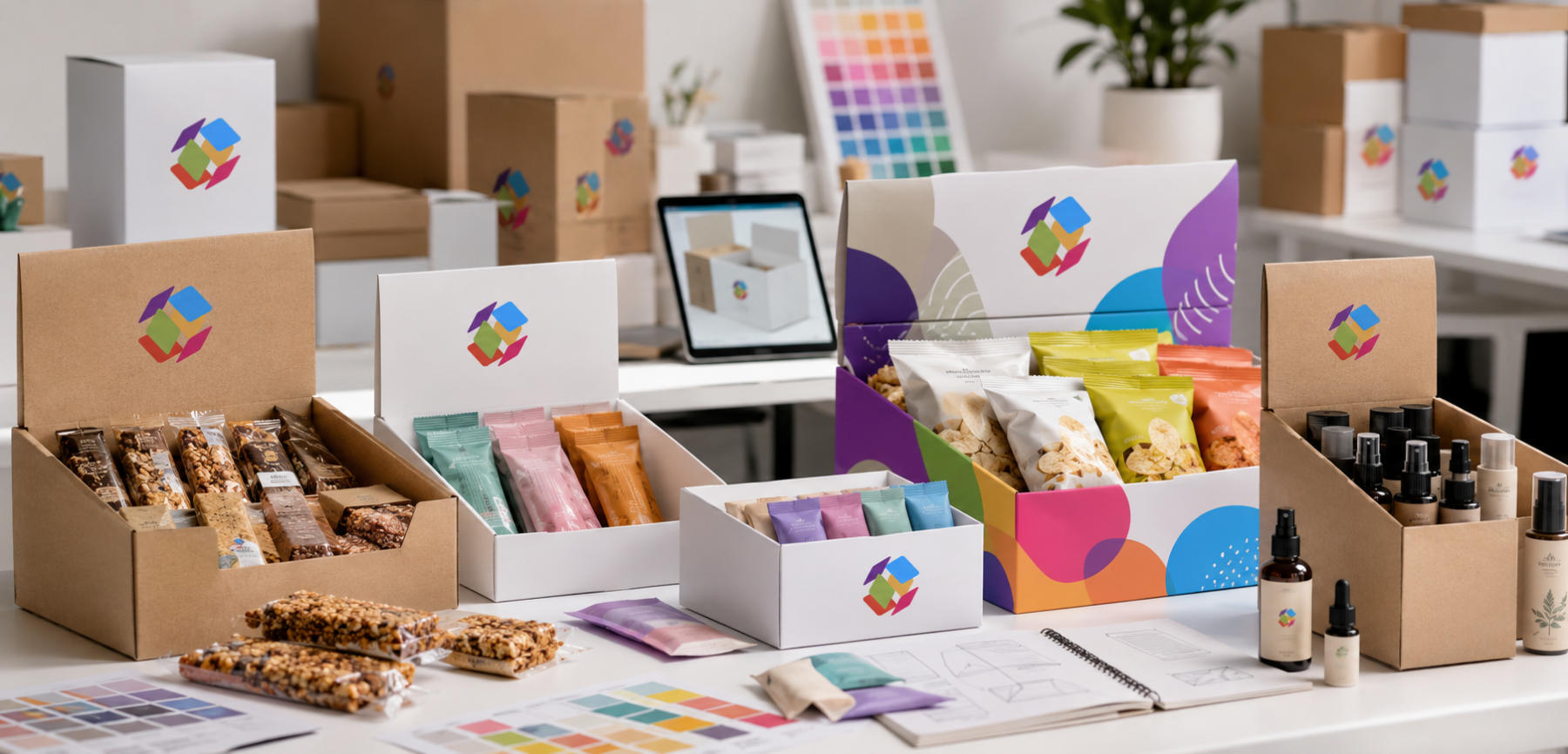
White corrugated material creates a cleaner printing background.
It is frequently used for cosmetics, healthcare products, electronics, food sachets, supplements, pharmacy products, and premium retail displays.
Full-color logos, pastel graphics, photographs, gradients, and detailed illustrations generally appear more accurately on white material than on natural kraft.
White-top corrugated board may provide a white exterior printing surface with a kraft or recycled-looking interior.
The material can cost more than a basic kraft liner, depending on the grade and supplier.
Businesses should determine whether the improved print appearance supports the product’s price position and retail environment.
Digital Printing and Low-MOQ Orders
Short Runs Can Reduce Initial Inventory Risk
Digital printing can be useful for businesses that need customized artwork but are not ready to order a large wholesale quantity.
The process does not require traditional flexographic printing plates.
This can reduce initial setup requirements and support several product variations.
A brand may print different artwork for chocolate, fruit, nut, and protein snack displays using the same structural dieline.
Cosmetic companies can create separate dispenser graphics for hydrating, brightening, calming, and exfoliating products.
Digital production can support product launches, seasonal campaigns, regional tests, trade shows, and low-volume retail programs.
The cost per box may remain higher than flexographic or lithographic production at larger quantities.
However, a smaller total order can protect the business from holding excessive packaging inventory.
Flexographic Printing for Wholesale Orders
Larger Quantities Can Improve Production Efficiency
Flexographic printing is widely used for corrugated packaging.
It applies ink using custom printing plates.
This method works well for logos, text, barcodes, handling symbols, patterns, and limited-color artwork.
The plate cost becomes easier to absorb when the business orders a larger quantity.
One-color flexographic printing on kraft corrugated board can provide an economical option for wholesale dispensers.
Multi-color flexographic printing can produce stronger retail branding but may require additional plates and setup.
Businesses should ask whether printing plates are included in the quotation and whether the same plates can be reused for repeat orders.
Litho-Laminated Dispenser Boxes for Premium Retail Programs
High-Resolution Printing Supports Strong Shelf Presence
Litho-laminated corrugated dispenser boxes use a high-quality printed sheet applied to the corrugated board.
This process supports photographs, gradients, detailed graphics, small typography, and accurate colors.
It is often used for cosmetics, electronics, healthcare products, specialty foods, promotional displays, and national retail programs.
Litho lamination involves more production stages than direct flexographic printing.
The printed sheet must be produced, laminated to the corrugated material, die-cut, and converted into the final structure.
This can increase cost and MOQ.
The premium print quality should support the product’s market position and sales environment.
Tooling Charges in Wholesale Packaging
Cutting Dies and Printing Plates May Be Separate Costs
Custom dispenser boxes generally require a cutting die based on the approved dieline.
The die creates the box shape, folds, slots, openings, tabs, perforations, and other structural features.
Flexographic printing also requires plates for each printed color or artwork area.
Foil stamping, embossing, debossing, and selected premium finishes may require additional tooling.
Some suppliers include tooling in the unit price, while others list it separately.
Businesses should ask whether the tooling becomes their property, remains with the supplier, and can be reused for repeat orders.
Reusing an approved cutting die and printing plates may reduce setup expenses on future production runs, provided the design and dimensions remain unchanged.
Prototype and Sample Costs
Testing Is an Investment in Production Accuracy
A physical structural sample may cost significantly more per unit than a wholesale production box.
This is because the sample is manufactured separately using prototype equipment or manual finishing.
The higher sample price should not be compared directly with the expected wholesale unit price.
A structural sample allows the business to confirm internal dimensions, product orientation, opening size, dispensing, ramp angle, divider fit, header stability, and assembly.
A printed sample can also confirm logo placement, colors, barcode performance, QR-code scanning, and retail appearance.
Skipping the sample stage may save a small initial expense but create a much larger risk when thousands of incorrect boxes are produced.
How Quantity Breaks Work
Suppliers May Offer Different Prices at Several Volumes
Wholesale packaging quotations often include quantity breaks.
A supplier may provide unit pricing for five hundred, one thousand, two thousand five hundred, five thousand, and ten thousand boxes.
The unit price usually decreases as the quantity increases.
However, the reduction may not remain equal between every level.
The largest savings may occur when the order reaches a production volume that uses the material, printing press, and cutting equipment more efficiently.
Businesses should request several quantity options rather than asking for only one price.
This makes it easier to compare the total investment, unit savings, inventory duration, and storage requirement.
Calculate Packaging Usage Before Ordering
Wholesale Savings Depend on Real Consumption
Businesses should estimate how many dispenser boxes they use each month.
The calculation should consider every retail location, product line, warehouse, distributor, promotional campaign, and seasonal increase.
For example, a business using five hundred boxes per month may consume six thousand boxes annually.
Ordering five thousand units may provide several months of inventory without creating excessive storage pressure.
Ordering twenty thousand units may reduce the unit price further but lock the business into the same artwork and structure for several years.
The ideal order quantity balances unit cost, cash flow, consumption speed, storage, product shelf life, and branding changes.
Inventory Risk in Large Packaging Orders
Lower Unit Cost Can Create Higher Total Exposure
A very low wholesale unit price can appear attractive.
However, the total order value may be much higher.
Businesses should consider whether the product dimensions, logo, regulatory information, barcode, ingredients, warnings, or artwork may change.
Packaging can become unusable when the product is reformulated, resized, rebranded, discontinued, or updated.
Seasonal designs create additional risk because they may only be usable during a limited period.
A moderate wholesale quantity may provide better overall value than the lowest possible unit price.
Storage Requirements for Bulk Corrugated Boxes
Flat Packaging Still Requires Clean and Dry Space
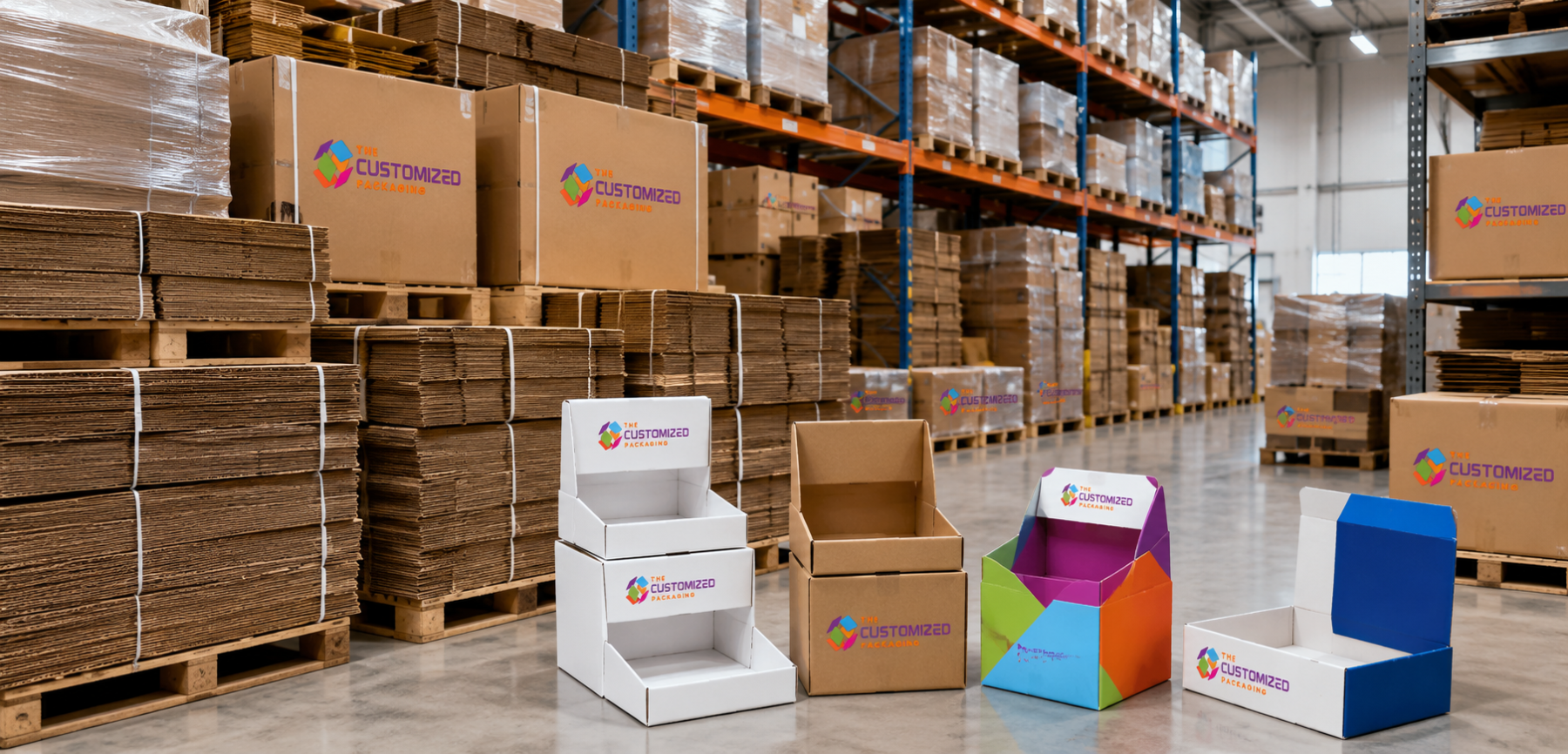
Corrugated dispenser boxes are usually supplied flat to reduce shipping and storage volume.
They should be stored in a clean, dry, organized environment away from water, strong odors, grease, heat, and excessive humidity.
High humidity can reduce corrugated compression strength and affect folding.
Boxes should remain protected from crushing, dust, pests, and forklift damage.
Different sizes and product versions should be labeled clearly.
Older packaging should normally be used before newer production when the design remains the same.
Businesses without sufficient storage space may compare smaller recurring orders, supplier inventory programs, staged deliveries, or warehouse fulfillment arrangements.
Freight and Delivered Pricing
Shipping Can Change the True Cost Per Box
A supplier may provide an attractive factory price but charge significant freight.
Corrugated boxes are lightweight but can occupy substantial transportation volume.
Large dispenser boxes, tall headers, pre-assembled packaging, and multi-part inserts increase shipment size.
Flat-packed boxes are generally more economical to transport than assembled displays.
The delivery distance, shipment method, pallet count, commercial address, liftgate requirement, and appointment delivery can affect freight cost.
Businesses should request the total delivered price to their ZIP code.
Comparing only the manufacturing unit price can create an inaccurate cost comparison.
Domestic and Overseas Wholesale Suppliers
Lead Time, Freight, Communication, and Risk Should Be Compared
Businesses may compare packaging manufacturers in the USA with overseas suppliers.
An overseas quotation may show a lower factory unit price but require longer lead times, ocean freight, customs clearance, duties, brokerage, port handling, and larger quantities.
Domestic production may provide faster communication, shorter transportation, easier sampling, and lower inventory commitments, although the manufacturing price may be higher.
The best choice depends on order volume, deadline, design complexity, freight cost, inventory planning, and risk tolerance.
Businesses should compare the complete landed cost rather than the factory price alone.
Lead Times for Wholesale Dispenser Boxes
Production Planning Prevents Packaging Shortages
Lead time begins after the specification, artwork, dieline, sample, and proof are approved.
Complex packaging may require more time for material sourcing, printing, lamination, finishing, die-cutting, gluing, quality control, packing, and freight.
Digital orders may have shorter setup requirements.
Litho-laminated or specialty-finished boxes may require longer production.
Rush production may be available at an additional cost, but it should not replace proper inventory planning.
Businesses should place repeat orders before the current packaging inventory reaches a critical level.
A reorder point can be based on average monthly use, production time, freight time, and a safety margin.
Repeat Orders and Reused Tooling
Approved Specifications Can Simplify Future Production
A repeat wholesale order may be easier than the first production run because the dieline, cutting die, printing plates, artwork, and material specification have already been approved.
The business should still confirm that no changes are required.
The supplier should identify the previous order number or packaging code.
Material availability and pricing may change between orders.
Colors should be checked, especially when strict brand consistency is required.
Businesses should ask how long the supplier stores cutting dies, printing plates, and approved files.
Ordering Several Product Versions Together
One Structure May Support Multiple Flavors or Formulas
A brand may use the same dispenser box dimensions for several product variations.
The artwork may change according to flavor, formula, color, or product type.
Combining several versions into one production program may improve purchasing efficiency, but the pricing depends on the printing method.
Digital printing can support multiple artwork versions with less conventional setup.
Flexographic production may require separate plates for each design.
Lithographic printing may require separate printed sheets.
Businesses should provide the quantity required for every version and ask whether the supplier allows a combined total MOQ or requires a minimum for each artwork.
Custom Inserts, Ramps, and Dividers in Wholesale Orders
Internal Components Should Solve Practical Problems
A gravity-feed dispenser may require a folded ramp to move products toward the front.
A sachet display may need dividers to separate flavors.
A hardware dispenser may use partitions to control heavy components.
A cosmetic display may use raised platforms to improve product visibility.
These components add material, tooling, assembly, and freight volume.
The business should confirm whether the inserts are supplied flat, pre-assembled, or integrated into the box structure.
A simpler design may reduce cost and packing labor.
However, removing a necessary insert can create product movement, poor dispensing, and an untidy display.
Assembly Labor and Packing Efficiency
The Cheapest Box May Require More Staff Time
Some dispenser boxes assemble through simple folds and locking tabs.
Others require several panels, inserts, dividers, and manual steps.
An automatic-bottom or pre-glued design may cost more per unit but reduce assembly time.
A business packing thousands of boxes should calculate the labor required for each structure.
A carton that saves thirty seconds during assembly can produce significant labor savings across a large wholesale run.
The sample should be tested by the employees who will actually pack the boxes.
Quality Control for Bulk Orders
Consistency Should Be Checked Across the Production Run
Wholesale orders should be evaluated for dimensions, board strength, printing, color, perforations, glue, folding, and opening performance.
The first production units should match the approved sample and proof.
Barcodes and QR codes should remain readable.
Perforated panels should remain closed during transportation and tear cleanly at the retail location.
Gravity-feed boxes should maintain the correct ramp and opening dimensions.
Businesses may request quality standards, production tolerances, inspection procedures, and sample retention from the supplier.
Packaging Compliance and Product Information
Printed Details Must Be Approved Before Production
Dispenser packaging may include ingredients, allergen information, usage instructions, warnings, quantities, barcodes, regulatory statements, recycling guidance, and contact details.
The business is responsible for verifying this content before printing.
A small spelling or regulatory error can make an entire wholesale order unusable.
Artwork approval should involve the relevant marketing, product, legal, quality, and operations teams.
Variable information such as lot codes or expiration dates may be applied separately rather than preprinted on the complete packaging run.
Sustainable Bulk Ordering Decisions
Responsible Packaging Includes Quantity Planning
Ordering an excessively large quantity simply to achieve a lower unit price can create unused packaging waste.
Responsible wholesale planning considers realistic consumption, product changes, storage, transportation, material efficiency, and disposal.
Custom sizing can reduce unnecessary corrugated board.
A shipping-and-display design may eliminate the need for a separate transport carton and retail tray.
Recycled-content material and responsibly sourced fiber may be available.
Environmental claims should reflect the actual board, coatings, inks, adhesives, inserts, and local recovery systems.
Businesses should request supporting material information before using terms such as recyclable, biodegradable, compostable, or sustainable.
How to Request an Accurate Wholesale Quote
Complete Specifications Reduce Pricing Revisions
A general request such as “I need five thousand dispenser boxes” is not enough for accurate pricing.
The supplier needs the internal dimensions, product measurements, packed weight, quantity per box, dispensing direction, box style, corrugated material, flute profile, printing colors, print coverage, artwork, inserts, finishing, order quantity, and delivery destination.
Businesses should also explain whether the boxes will be used for retail, shipping, storage, refrigeration, or workplace dispensing.
Physical product samples can improve structural accuracy.
The supplier should provide a written quotation identifying the complete specification.
Information to Provide When Ordering Wholesale Dispenser Boxes
| Required information | Details to include | Why it matters |
|---|---|---|
| Product dimensions | Length, width, thickness, and shape | Determines internal box dimensions |
| Individual product weight | Weight of one packaged unit | Influences material and gravity feed |
| Quantity per box | Total units and product variations | Determines box capacity |
| Packed box weight | Products, inserts, and carton combined | Helps select corrugated strength |
| Dispensing direction | Front, top, side, or gravity feed | Determines opening placement |
| Box style | Countertop, shelf-ready, tear-away, workplace, or drawer | Defines the dieline |
| Corrugated material | Kraft, white, white-top, E flute, B flute, or other grade | Influences strength, appearance, and cost |
| Printing requirements | Logo, colors, photographs, barcodes, and QR codes | Determines the printing method |
| Insert requirements | Ramps, dividers, partitions, or raised supports | Affects tooling and unit pricing |
| Finishing options | Lamination, foil, spot UV, embossing, or coating | Adds production processes |
| Order quantities | Preferred quantity and alternative volume breaks | Supports pricing comparison |
| Delivery ZIP code | Commercial destination and delivery details | Allows freight calculation |
| Required date | Target delivery deadline | Supports production planning |
| Storage conditions | Dry warehouse, refrigeration, humidity, or retail shelf | Helps evaluate material performance |
Providing this information at the beginning can reduce delays and unexpected price changes.
Comparing Wholesale Supplier Quotations
Every Quote Should Use the Same Specification
Businesses should compare quotations line by line.
The internal dimensions, material grade, flute profile, printing method, number of colors, inserts, finishes, quantity, tooling, packing, and freight should match.
One supplier may quote a lightweight E-flute board, while another uses a stronger B-flute material.
One quotation may include delivery, while another lists only the factory price.
Some suppliers may include prototypes and tooling, while others charge them separately.
The lowest quotation may not represent the lowest total cost or best-performing box.
Questions to Ask a Wholesale Dispenser Box Manufacturer
Clear Answers Help Prevent Unexpected Costs
Businesses should ask which corrugated grade is included, what printing method will be used, whether the dimensions are internal or external, and how the dispenser will perform when full and partially empty.
They should confirm the minimum order quantity, available quantity breaks, setup charges, cutting-die cost, printing-plate cost, sample cost, production lead time, and freight.
The supplier should explain whether the tooling can be reused for repeat orders.
Businesses should ask whether color matching, barcode testing, QR-code testing, and material documentation are available.
They should also confirm how boxes will be packed and how many units will fit on each pallet.
Buy Wholesale Custom Corrugated Dispenser Boxes Online
Digital Ordering Still Requires Complete Technical Information
Businesses ready to buy wholesale custom corrugated dispenser boxes online should provide the complete packaging specification rather than selecting a general box category and quantity.
The supplier can then prepare a custom dieline, recommend a corrugated flute, and identify an appropriate printing process.
A digital proof should be approved before printing.
A physical sample should be tested before bulk production, especially for gravity-feed structures, flexible sachets, heavy products, complex perforations, tall headers, and custom inserts.
The final purchase order should identify the dimensions, material, printing, quantity, tooling, production time, freight, and delivery destination.
Companies searching to order bulk corrugated dispenser boxes online should compare full delivered quotations and not only advertised starting prices.
Wholesale Custom Corrugated Dispenser Boxes Across the USA
Bulk Packaging for Retail, Industrial, and Ecommerce Businesses
At The Customized Packaging, we manufacture wholesale custom corrugated dispenser boxes for snack brands, cosmetic companies, tea and coffee businesses, healthcare suppliers, pharmacies, retailers, manufacturers, offices, warehouses, hardware businesses, ecommerce companies, distributors, and promotional programs throughout the USA.
We create gravity-feed boxes, countertop displays, front-opening dispensers, shelf-ready packaging, tear-away cartons, kraft corrugated boxes, white printed dispensers, full-color displays, custom ramps, dividers, partitions, printed headers, and packaging with logo.
Businesses searching for wholesale corrugated dispenser boxes near me, custom dispenser box manufacturer USA, bulk dispenser packaging supplier, custom printed dispenser boxes wholesale, low MOQ corrugated boxes, or order wholesale dispenser boxes online can request packaging developed around their products and volume requirements.
We support businesses throughout New York, New Jersey, California, Texas, Florida, Illinois, Pennsylvania, Ohio, Georgia, North Carolina, Washington, Massachusetts, Virginia, Michigan, Arizona, Tennessee, Indiana, Missouri, Maryland, Wisconsin, Colorado, Minnesota, Nevada, Oregon, Kentucky, Utah, and other locations across the United States.
Want to Estimate Your Wholesale Packaging Cost?
Try the Custom Box Packaging Cost Calculator
Businesses can use the Custom Box Packaging Cost Calculator to develop an initial estimate based on box dimensions, style, material, printing, finishing, inserts, and quantity.
The calculator can help plan wholesale dispenser boxes, gravity-feed cartons, snack displays, sachet organizers, cosmetic packaging, shelf-ready boxes, kraft dispensers, white corrugated cartons, full-color displays, and custom inserts.
The final price may change according to the corrugated grade, flute profile, product weight, printing coverage, number of artwork versions, tooling, dividers, ramps, finishing, order quantity, freight, and delivery destination.
After reviewing the estimate, businesses can request a detailed wholesale custom corrugated dispenser box quote based on the complete packaging specification.
Why Choose The Customized Packaging for Wholesale Dispenser Boxes?
Bulk Packaging Developed Around Cost, Performance, and Branding
At The Customized Packaging, we help businesses order wholesale custom corrugated dispenser boxes that combine structural performance, organized dispensing, efficient packing, branded presentation, and competitive bulk pricing.
We provide kraft corrugated board, white material, white-top liners, E flute, F flute, B flute, digital printing, flexographic printing, litho-laminated graphics, front openings, gravity-feed ramps, dividers, tear-away panels, custom headers, digital proofs, physical samples, and wholesale production.
Our packaging supports snacks, sachets, cosmetics, healthcare supplies, hardware, electronics accessories, office products, promotional items, and other small retail or industrial products.
As a professional custom corrugated box manufacturer and packaging supplier, we develop each order around the product dimensions, packed weight, dispensing method, artwork, retail or warehouse environment, order volume, and delivery destination.
Businesses remain responsible for confirming that selected materials, inks, coatings, adhesives, inserts, labeling, environmental claims, and product-contact components meet the requirements applicable to their products and markets.
Final Thoughts
The Best Wholesale Order Balances Unit Price with Total Business Value
Wholesale custom corrugated dispenser boxes can reduce unit pricing, improve packaging consistency, support multiple retail locations, and simplify repeat ordering.
However, the lowest unit price does not always create the best overall result.
Businesses should consider MOQ, total investment, monthly usage, storage space, freight, artwork changes, product updates, assembly labor, and inventory risk.
Digital printing can support low-MOQ and short-run packaging. Flexographic printing can provide economical branding for larger quantities. Litho-laminated packaging can support premium retail graphics and national display programs.
Accurate measurements, appropriate flute selection, practical structure, reusable tooling, physical sampling, and complete delivered quotations are essential before bulk manufacturing.
Businesses should request several quantity breaks and compare the savings against how long the packaging will remain in storage.
Whether you need wholesale snack dispensers, sachet display boxes, cosmetic countertop displays, gravity-feed packaging, shelf-ready cartons, custom printed boxes with logo, bulk corrugated dispenser boxes, or low-MOQ retail displays, the correct ordering strategy can improve both packaging performance and long-term cost control.
For complete guidance about dispenser styles, corrugated materials, printing methods, inserts, perforations, pricing, and supplier selection, read our main pillar article titled “Custom Corrugated Dispenser Boxes: The Complete Guide to Styles, Materials, Printing, and Wholesale Ordering.”
At The Customized Packaging, we create wholesale dispenser packaging that is built to protect, structured to dispense, and planned to help businesses order efficiently, control costs, and grow throughout the USA.
